


The Blood of Dawnwalker Review: I Did Not Expect to Love the Time Limit
By Jaymo | Today at 12:15pmThere is something strangely refreshing about The Blood of Dawnwalker. After years of RPGs, open-world games, and Souls-like action games built around always bigger maps filled with icons, collectibles, side activities, skill trees, and checklists, Rebel Wolves decided to do something different. Instead of giving you a world that patiently waits for you to finish everything, The Blood of Dawnwalker gives you a simple problem. You do not have enough time.
You have 30 days and 30 nights to save your family, but you cannot help everyone, complete every quest, or see everything in a single playthrough. And that is exactly what makes the game so good.
The Blood of Dawnwalker is not perfect. Its combat can feel clunky, its performance still needs some work, and there are moments where its technical limitations become obvious. But after finishing it, I came away with something I rarely feel after completing an RPG, or any game, really.
I genuinely felt like I had lived through my own story.
Disclaimer: This review will not contain any big story spoilers, but it will contain a few details that can be considered spoilers, such as unknown character names or side quest choices you have to make.
Coen Could Become One of Gaming’s Greatest Main Characters
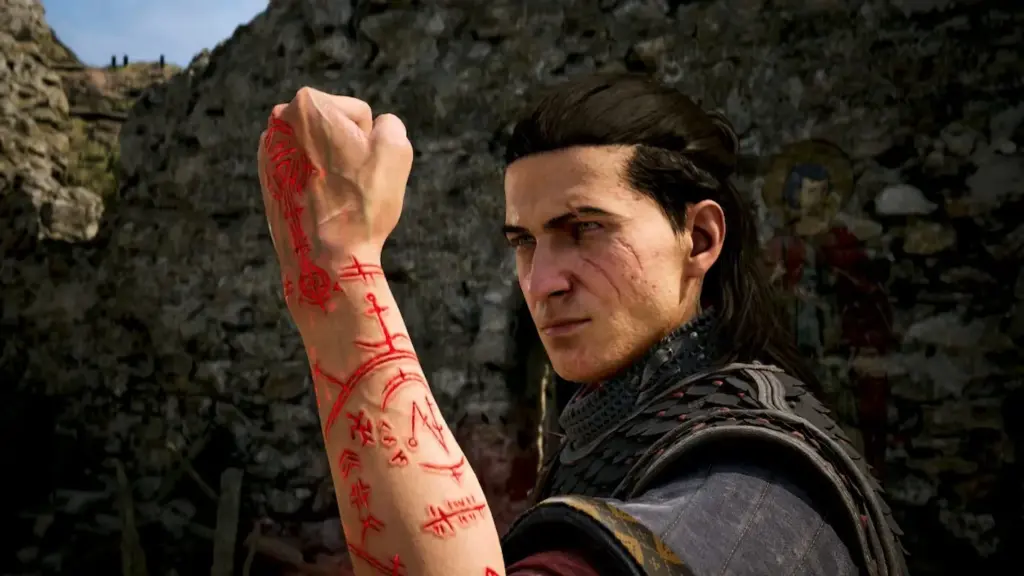
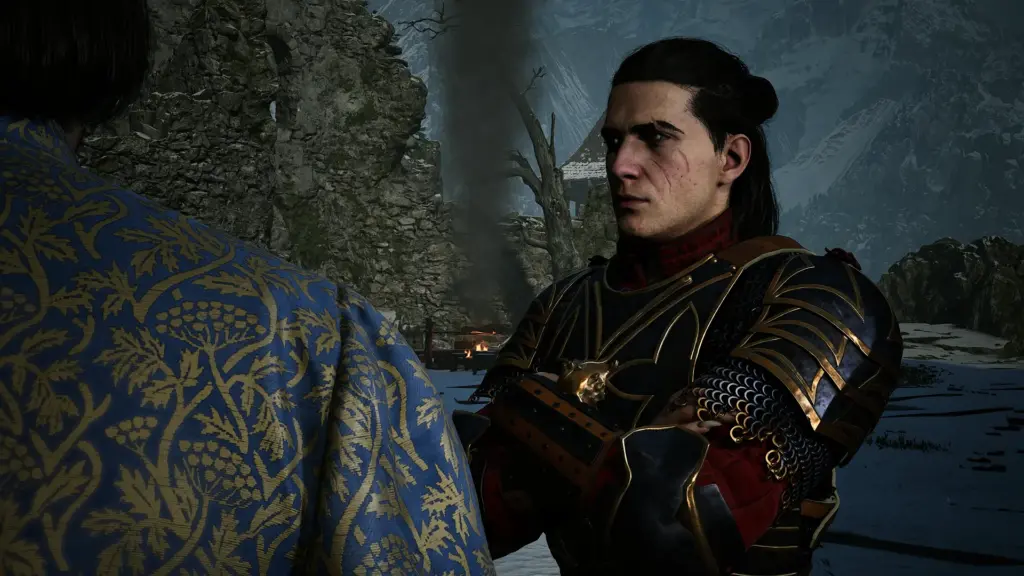
The story begins with Coen, a young man living in the valley with his family. At first, he seems relatively familiar. He is the older brother in a struggling family, with a sick mother and a father who expects him to literally shoulder every responsibility. He has to look after his siblings, follow his father’s orders, and do whatever he can to keep his family together. When I started the game, I felt like, “this does feel like pretty much every other character, nothing unique”. I was not sure I would like Coen.
Then the game gives you one of its first choices, but at the same time, it feels like such a small choice. Your mother refuses to eat, and your father orders you to force-feed her, but you can refuse. And to be honest, neither option feels good. I did not want to force-feed her because it felt cruel. But refusing means accepting that she might die. And when Coen’s father confronts him about that decision, the game immediately establishes what its choices are going to be about.
There are not always good choices. Sometimes there are only choices that hurt in different ways. That philosophy follows you throughout the entire game. You quickly learn that you cannot save everyone, and even minor decisions can have bigger consequences much later.
But what makes this work particularly well is Coen himself. He quickly became much more than that simple big brother who needs to take care of his family. You realise he is not just doing that, and even before he turns into a Dawnwalker, he shoulders much more and has to live with the consequences of his own choices. Consequences that hurt others in terrible ways. Coen does not feel like a blank player avatar designed to accommodate whatever personality the player wants to give him. He has his own identity, personality, opinions, and reactions. He feels like an actual character.
And because the world gives him so much room to develop, Coen has the potential to become one of the most memorable protagonists of this generation.
The Time Limit Is the Game’s Greatest Strength
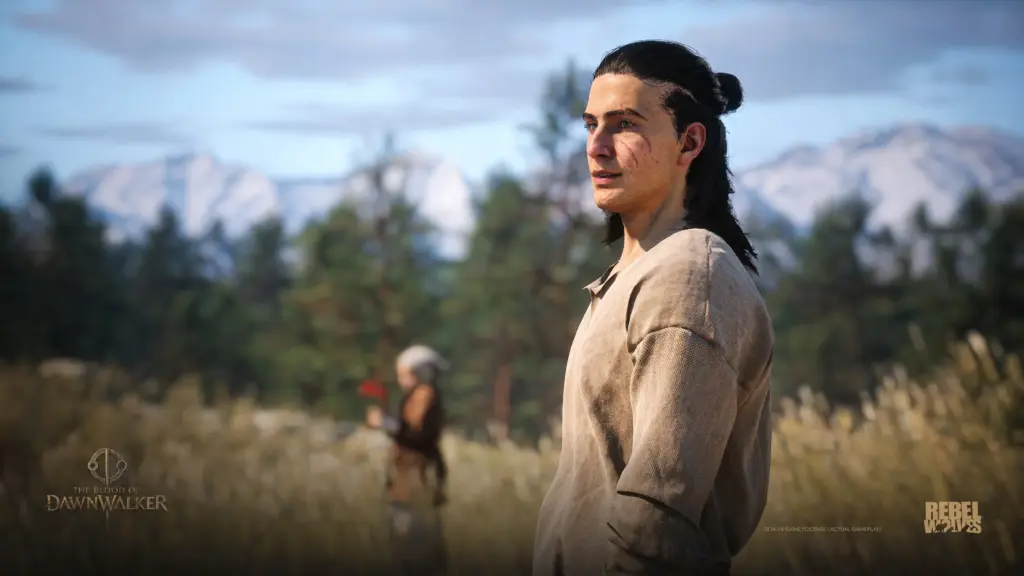
I went into The Blood of Dawnwalker worried about its time system. I hate time limits in games. I hated it in Majora’s Mask, I hated it in Lightning Returns: Final Fantasy XIII… The idea of constantly watching a clock when you are trying to enjoy an RPG has never appealed to me. So when I learned that Dawnwalker gives you 30 days and 30 nights to save your family, I was expecting it to become stressful.
And it just did not. This game reconciled me with time limits. In fact, by the end of the game, I realized that the time system might be its single greatest feature.
Time advances when you complete certain quests, activities, or upgrades. Not everything consumes time, but enough things do that you have to think about what you are doing. That changes the way you approach the entire game.
Think about how often RPGs tell you that something is urgent. A character might tell you that someone is dying, a village is under attack, or you have only a few days to prevent a catastrophe. Even in The Witcher 3. Geralt spends the entire game telling you how much Ciri is in danger, but you can still spend 200 hours playing Gwent instead. The entire world might be destroyed in a few days, but then you spend the next 80 hours opening treasure chests, clearing bandit camps, collecting herbs, and jumping off cliffs because you saw an unexplored icon on the map.
The urgency is completely artificial, and Dawnwalker makes you realise that this sucks.
This game does not let you spend time on things you think are futile. You have to consider your priorities.
- Who deserves your help?
- What is worth your time?
- What quest matters more?
- Is that new ability worth spending part of your remaining time?
- Should you go after that piece of gear, or should you continue pursuing the person you promised to save?
It completely changes the traditional RPG completionist mindset. Instead of asking yourself, “How do I complete everything?”, you are constantly asking, “What do I want to spend my limited time on?”
And I loved that in the end. I sort of understand why some players have already modded the time limit out of the game or disliked it enough to leave negative reviews. But I genuinely think you are doing yourself a disservice if you remove it before completing a full playthrough. Because the time limit does not make the game more stressful. It makes you more proactive. Like, think about it! You stop blindly following every marker on the map and start thinking about what really matters to you. When did a game give you a sense of completion like this, even though you did not finish everything?
The game also gives you considerably more freedom than you might initially expect. I completed almost every side quest I came across, upgraded my skill tree the way I wanted, obtained a full Legendary set for both my day and night loadouts, defeated all three lieutenants, and still had enough time left to save my family. I did not feel like I was constantly rushing or that I had missed something. I was literally less stressed about things than when I try to complete everything on a list.
Yes, there were quests I never found or completed, or activities I ignored. But on the other hand, I completed some objectives that consumed entire days because I decided they were important enough to finish.
But that is the point. Those decisions were mine, I accepted the consequences, and I was ok with them because I made those choices, and I felt at peace about it. Suddenly, clearing out a bandit camp did not feel like a chore anymore, and helping that apothecary deliver medicine to a farm located on the other side of the map did not feel like something that was forced on me to do. I chose to do it. By the end, I felt more satisfied with my playthrough than I have after completing RPGs where I unlocked every achievement and cleared every objective on the map.
For once, “100% completion” was not the goal. My story was.
One Change I Would Make to the Time System
There is one part of the time system I would change, and it is the skills. Most skills require you to spend time before you can unlock them. I understand the reasoning behind making big abilities consume time, since Coen is essentially spending time learning something new. But spending precious time on basic upgrades like increased health, stamina, or carrying capacity felt unnecessary.
I would personally keep the time cost for the more significant abilities and leave basic character progression outside of the system. It is a relatively small complaint, though, because the rest of the system works pretty well.
The Combat Is Good, but Needs More Polish
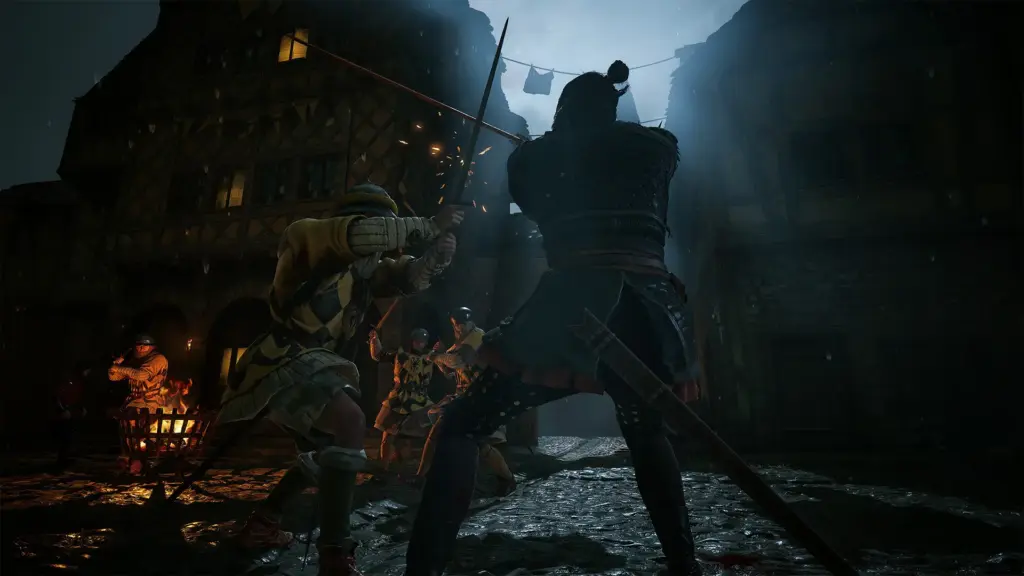
Combat was probably my biggest gameplay complaint. Dawnwalker uses a directional combat system, meaning your attacks and parries depend on the direction you are moving your controls to. For example, if the enemy attacks left, you have to parry left, or if you constantly attack right, enemies will block you more often, so you have to switch directions.
At first, I did not like it, I am not going to lie. It felt clunky, and I especially disliked having directional parries. Eventually, however, I realized that part of the problem was me. I was playing it as I play far too many modern action games, and I just press the attack button repeatedly and hope everything dies before I do. Once I stopped spamming and started paying attention to my opponent, combat became much more enjoyable. The directional attacks are fun once you understand them, and taking your time makes encounters considerably better.
But the system still has some issues. Coen’s movements can feel awkward, and combat does not have the fluidity of the best modern action RPGs. There were a few moments where I got the same feeling I had playing the original The Witcher. Coen sometimes looks like he is fighting with a stick firmly lodged somewhere it should not be.
The directional parry is another mechanic I would personally change. Having to parry in a specific direction can work when you can clearly see an incoming attack. But when an enemy attacks from off-screen, being forced to guess the direction just feels frustrating. The amount of times I died because I did not see the enemy behind me… I would happily keep directional attacks, but I would make parrying universal.
There is also a particularly annoying interaction with random encounters. Sometimes I just wanted to run from one place to another, and if you meet some wildlife on your way, this is just impossible. Wolves and boars aggro a lot, and they just do not let go. Escaping the fight felt like an entire activity on its own. Coen automatically focuses on enemies, and because jumping is tied to another combat action during fights, you cannot simply hop over a tiny rock and run away, he just gets stuck there, and it is annoying.
Sometimes I just wanted to reach my destination, and I did not need to kill the 47th boar of the day. These are not game-breaking issues, but they are the areas where I think Rebel Wolves still has the most work to do.
A Story Where Choices Have Consequences
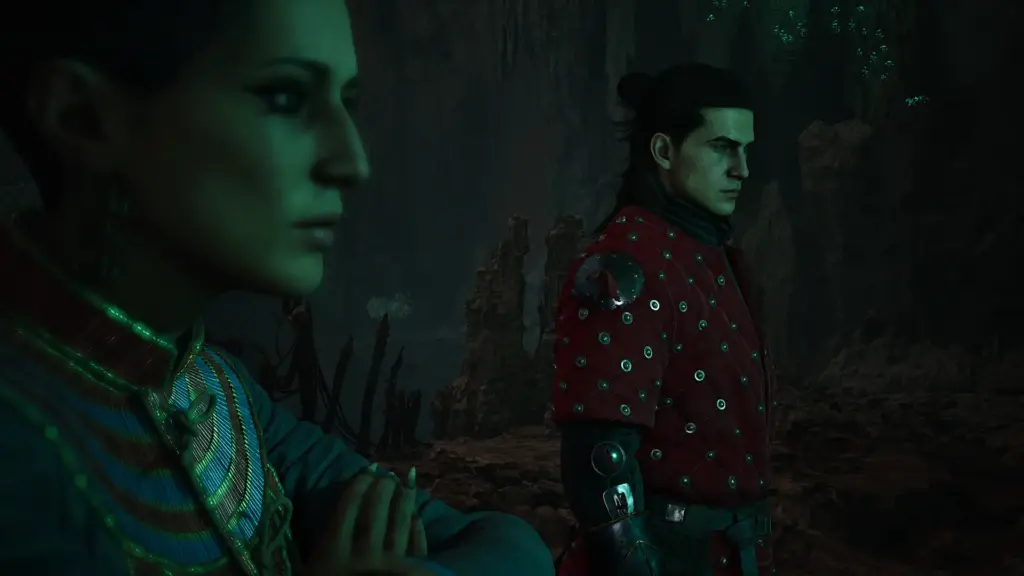
Without spoiling the important parts, the story is one of the strongest I have experienced in a game, and the biggest reason is simply that your choices matter. It is also not just the obvious dialogue choices. Sometimes something as simple as allowing a character to go somewhere before you do can have consequences later. Caring too much about one character can mean someone else suffers. And that is what makes the game’s choices so effective. You are not simply choosing between a blue dialogue option and a red dialogue option and watching a different cutscene. You are making decisions and then living with them.
I did have some trouble becoming emotionally attached to Coen’s family, and that surprised me given how central they are to the story. But the rest of the cast more than made up for it. Anca, Ambrus, Lacra, and Vicho were the characters who left the biggest impression on me. I will not explain why, because their stories are best experienced without context. But they all made me question something at some point.
- Sometimes it was my own sanity
- Sometimes it was questioning if the people I thought were monsters really were
- And sometimes I was wondering if I was making the right decision at all
But again, it felt like the whole point. Yes, sometimes you are not going to make the “right” choice, but that is ok. Because in the end, there is no right or wrong choice, and simply a choice and a consequence, and you have to live with both.
You can even decide that your family is not your priority. Nothing forces you to spend your limited time trying to save them. You can decide that the rest of the valley deserves your help more. But, once again, you have to accept the consequences. The game does not punish you for making the “wrong” choice. It simply lets the world react to what you did.
That is what makes its storytelling so compelling.
Relationships Feel Like Part of the World
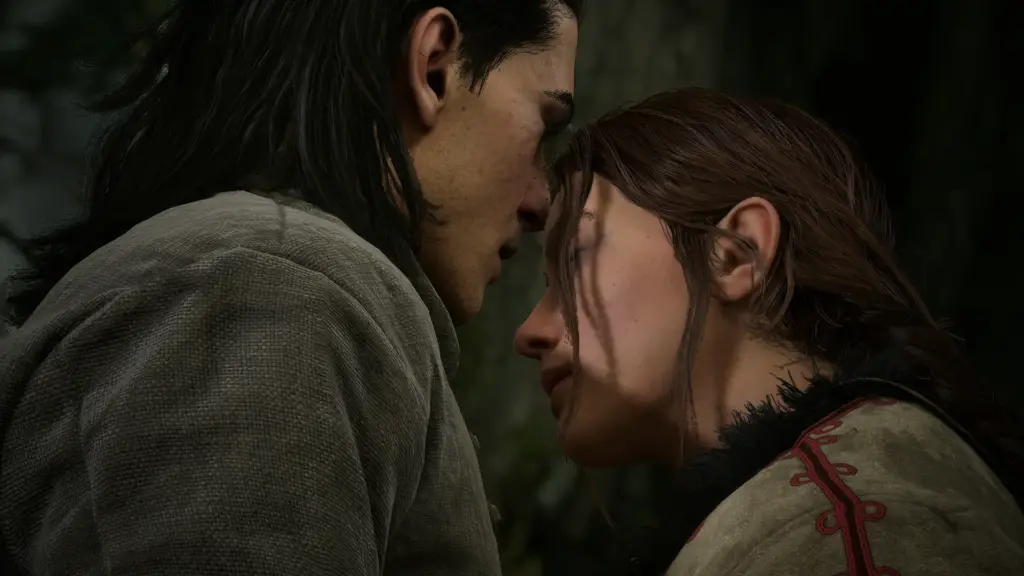
The characters are not just there to hand you quests either. You can build relationships with them through your decisions, your actions, and even the way you speak to them. And yes, there are romances. But even outside of romances, all the different friendly relationships feel like another extension of the game’s philosophy.
You have limited time, and you cannot give everyone everything or make everyone happy. So who do you choose to spend that time with?
Again, Dawnwalker keeps coming back to the same idea without making it feel like a problem.
Performance Is Mostly Fine, but Cutscenes Need Work
I played The Blood of Dawnwalker on PC with a controller using an RTX 4060, High settings, and Quality mode.
Overall, I was surprised by how smoothly the game ran. I did encounter one particularly annoying bug involving Vicho’s shop in Svartrau. Every time I tried to buy the Legendary ring he was selling, leaving the shop would result in a black screen, forcing me to Alt+F4 and restart the game. Thankfully, that was the biggest issue I encountered.
Coen occasionally gets stuck on rocks or bumps into things in ways that look ridiculous, but most of those situations were caused by me trying to find shortcuts that clearly were not supposed to exist.
The bigger issue is the cutscenes. There were quite a few moments where the frame rate dropped really badly during cinematics. Textures also sometimes took a little too long to load when a cutscene began, and that can a bit ruin the moment.
So yes, the game still needs some performance work. But based on my experience, it was not nearly as bad as some of the reactions online might suggest. I also tried playing with keyboard and mouse, but I would recommend a controller. Much like The Witcher 3, Dawnwalker simply feels better when played with one.
A Really Unique Experience
Ultimately, The Blood of Dawnwalker is a game about accepting that you cannot have everything.
- You do not have enough time
- You have to make a choice
- And then you have to live with it
- Sometimes the consequences are good
- Sometimes they are horrible
- Sometimes you will not even realize what your choice caused until much later
And I think that is what makes this game so special. Modern RPGs have trained us to approach their worlds like these huge checklists. You can take any game from Assassin’s Creed, Crimson Desert, Final Fantasy, Elden Ring… it is always the same thing. Find every collectible, clear every marker, complete every side quest, unlock every skill, get every ending, reach 100%. But this game made me question why. Why do we treat games like checklists today? And why do so many people hate it so much when one game finally does things differently?
Dawnwalker basically asks you to stop doing that, and it honestly made me feel really good to stop thinking about having to clear every single thing out. I had so much more fun like this. You cannot do everything, and that is okay.
You do not need to experience every quest, or collect every piece of equipment, or save every character. You just need to make the decisions that feel right to you.
That design philosophy is a huge risk for Rebel Wolves. The developers could have made another open-world RPG filled with content designed to keep players busy for hundreds of hours. Instead, they built a game around time, and what it truly means. And somehow, that made my time with the game feel more meaningful. When the credits rolled, I did not think about the quests I missed. I thought about the ones I had chosen to do, the characters I helped, the decisions I made, and the consequences I accepted. That is something I rarely get from games anymore.
The Blood of Dawnwalker is not flawless or perfect. The combat needs more refinement, some animations and movement can feel awkward, and the technical performance could use some additional work. But those problems do not change what I think is the game’s biggest achievement.
It feels different.
And in a world where so many games are starting to feel like variations of the same thing, that is incredibly valuable. The Blood of Dawnwalker took a big risk with its time limit, its world, and its refusal to let players do everything in a single playthrough. For me, that risk paid off. It is currently my Game of the Year.
I definitely want more of it, so thank you, Rebel Wolves, for this 100/10 game, minus the small performance issues that I hope you will fix with time! And for the love of god, why so many jump scares…
For more information about games, check out our latest news!