


The Blood of Dawnwalker Details Its 30-Day System and Gameplay
By Jaymo | Today at 3:54pmOnly a few weeks are left before The Blood of Dawnwalker releases, and with all the different systems, creatures, locations, and more, Rebel Wolves has decided to release a new video going over pretty much everything you need to know about the main gameplay systems and story. This video takes a closer look at the game’s world, story, combat, progression, and, most importantly, the unusual 30-day and 30-night system that will make your journey pretty special, or pretty stressful, depending on how you manage.
If you have been wondering what really makes The Blood of Dawnwalker different from other open-world RPGs, this is probably one of the better overviews we have had so far.
A Dark Fantasy World Ruled by Vampires
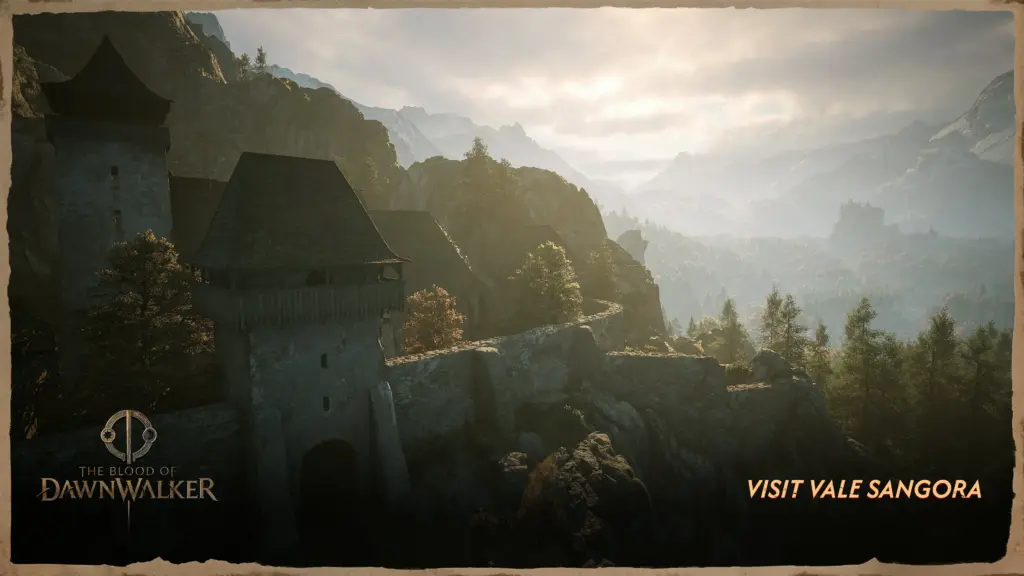
When it comes to the story, The Blood of Dawnwalker is a dark fantasy open-world action RPG set in 14th-century Europe. The first chapter takes place in Vale Sangora, a region hidden in the Carpathian Mountains. The area has already been devastated by a plague, leaving its population vulnerable. That is where Brencis, probably the most powerful vampire (also known as Vrakhiri), enters the picture.
After taking control of the valley, Brencis establishes a brutal and dangerous new regime. He uses his own blood to heal the remaining population, but it comes with a heavy price. In exchange, the people of Vale Sangora are expected to give him absolute obedience. And if you do not agree to it, you will not make it out safely.
Brencis also divided the region into three dominions, each controlled by one of Brencis’s vampiric officers. Each of them controls a different part of the regime, from blood supplies and draining dungeons to alcohol distribution and the Blood Guards.
- Ambrus
- The youngest of the three and eager to prove himself
- Responsible for stockpiling blood and managing the regime’s draining dungeons
- Bakir
- Oversees the distillation and distribution of alcohol, providing the population with temporary relief from everyday life
- Despite this softer public role, he is willing to use his inherent brutality to subjugate the population
- Xanthe
- Creates and commands the Blood Guards, the elite soldiers of the vampire regime
- Keeps out of the spotlight and is surrounded by rumors of dark rituals and mysterious disappearances

There is one important detail. As Coen begins disrupting their operations, Brencis’s Court will respond by introducing new orders designed to make his journey increasingly difficult. So basically, if you annoy them a little bit too much, they might decide to make your life much harder. What exactly that means, I guess you will have to try and find out for yourself!
Coen Is Both Human and Vampire

As you probably know, you take control of Coen, a young man whose family is kidnapped by Brencis. Coen eventually becomes a Dawnwalker, meaning he remains human during the day but transforms into a vampire at night. And this is not simply a cosmetic transformation.
The two sides of Coen offer completely different ways to approach the world, the combat, NPCs… Everything works differently depending on if you are a human or a vampire.
- Human Form
- Active during the day
- Allows you to develop witchcraft, using Coen’s own blood to cast supernatural abilities
- Witchcraft powers let you:
- Communicate with the dead
- Move faster
- Interact with the astral plane and inflict pain on enemies
- Vampiric Form
- Active during the night
- Things get considerably more violent
- Coen’s vampire form gives him:
- Claws and fangs
- Supernatural mobility
- Wall-climbing abilities
- The ability to transform into a wolf for faster travels
Basically, during the day you can walk around NPCs as a perfectly normal human, but that does not mean you are weak during that time. You can fight with a sword and use powerful Witchcraft spells to defend yourself or attack. And as a Vampire, you have more strength and supernatural abilities that allow you to access passages you cannot enter as a human. However, if you lean a bit too much on your Vampire side, it will come at a price.
Combat is also very flexible. The game features an Omniblock/Omniattack system, where Coen automatically chooses the direction of his attacks and blocks. This is designed to make combat more accessible, but it still requires players to dodge attacks that cannot be blocked. There is also a more traditional directional combat system, where you manually read enemy movements and react to them. This approach focuses more on timing, positioning, and rhythm. Both systems also include active abilities that can increase damage, heal Coen, control groups of enemies, or interrupt enemy attacks. So if you want something more accessible, or for a more demanding combat system, you both have an option.
Blood Gives You Power… And Corruption

Vampirism comes with a constant need for blood. You are going to tell me, so far, it is pretty logical. Vampires need blood, this is not new information. But it does have an actual impact in-game, since it is not just lore information saying Coen needs to drink blood when he is a Vampire. Drinking blood allows Coen to unlock new abilities and become more powerful, but it also corrupts him. The more you lean into the Vampiric side, the more humanity you lose. And that might have consequences you will have to find out.
It is one of the game’s main risk-reward systems. You can focus on the human and witchcraft side, embrace your vampiric abilities, or combine both sides. The interesting part is that neither path is simply presented as the obvious “correct” choice.
You are essentially deciding how much of Coen’s humanity you are willing to sacrifice in exchange for power.
You Only Have 30 Days
One of the most unusual systems in The Blood of Dawnwalker is its time limit. Coen has 30 days and 30 nights to rescue his family before Brencis’s coronation. But this is not a traditional countdown where the game is constantly ticking away in real time when you are exploring. So for those who are not a fan of time limits in-game, you will be happy to know that it is way more manageable in Dawnwalker. The timer is not constantly going down. Only certain quests with an hourglass icon will make you spend time.
Time is basically treated as a resource you can spend for certain things, such as:
- Completing certain quests
- Completing certain activities
- Learning new abilities can sometimes cause time to pass as well
And that means the world can change without you directly triggering those changes. Some opportunities may appear, and others can disappear permanently. Characters can change their circumstances, events can unfold, and certain possibilities may simply no longer be available depending on how much time you have spent. But do not worry, time will not pass randomly. Every quest or action that will spend time will be marked with an Hourglass icon. So you can decide when you want to spend and complete those.
And even if you fail to rescue your family within those initial 30 days, it does not simply mean game over. The story continues, but Coen’s journey will take a different direction. It will, of course, have consequences.

You Can Basically Do Whatever You Want
Despite having one big objective, saving his family, The Blood of Dawnwalker is not going to force you down a specific route. Quests and activities are optional building blocks for your own version of the story. You can explore Vale Sangora, search for allies, discover new abilities, investigate opportunities, or focus almost entirely on the main objective. And Rebel Wolves is going pretty far with this freedom.
The developers say players can theoretically attempt to storm Brencis’s castle immediately after the prologue, but defeating him that early as a newly created Dawnwalker would be extremely difficult. But the fact that the game allows you to try is a pretty good demonstration of the freedom you have in the game.
Vale Sangora Is Built for Exploration
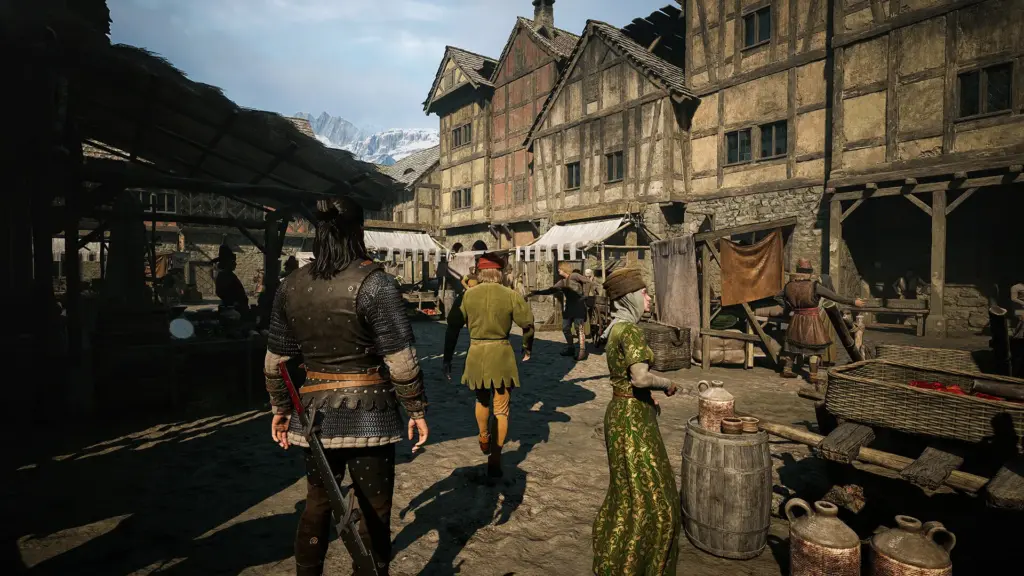
The open world itself includes a mixture of environments, from forests and cities to swamps, caves, and mountain peaks. Exploring these areas can lead to new weapons, armor, abilities, knowledge, allies, and other opportunities. And because time is constantly influencing the world, exploring is not just about finding collectibles or clearing icons from a map.
Spending time in one part of Vale Sangora can potentially mean missing something happening somewhere else. Depending on the side quests you complete, the people you talk to, or the locations you visit, your story might change completely.
Your Version of Coen’s Story

Ultimately, The Blood of Dawnwalker is built around the idea that there should not be one single optimal way to experience Coen’s journey. There is no best route or best way to play. The choices you make, the people you help, the abilities you develop and, perhaps most importantly, how you spend your limited time will dictate what happens. Add the human VS vampire progression system on top of that, and two players could potentially finish the game having taken very different paths through Vale Sangora.
The Blood of Dawnwalker is not just another open-world RPG with a vampire protagonist. Its entire structure revolves around balancing time, power, exploration, and Coen’s remaining humanity.
And that is probably the most interesting thing about it.
For more information about The Blood of Dawnwalker, check out our latest news!